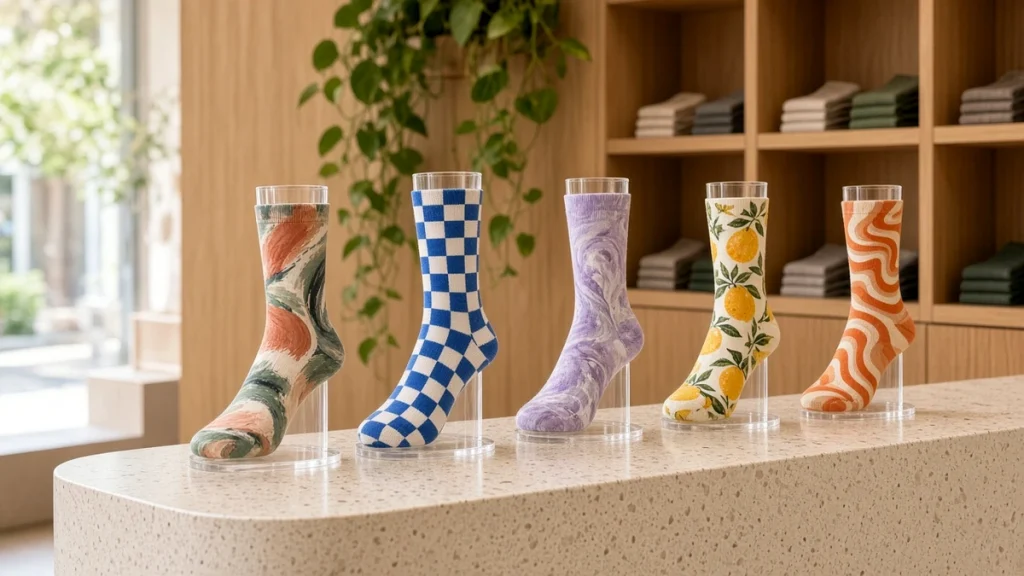
Socks used to be a basic commodity. Today they are a fashion accessory, a gift, a promotional item and a canvas for self-expression. The custom socks market has grown alongside that shift, driven by digital printing, online retail and consumer demand for personalization. Here are the trends shaping the category and what they mean for brands, retailers and manufacturers.
Trend 1: Personalization goes mainstream
Consumers increasingly expect products that feel personal: names, pet photos, family faces, inside jokes. Custom socks are an affordable way to deliver that. Digital printing makes one-off pairs practical. Our list of personalized socks business ideas shows how varied the market is.
Trend 2: Seamless all-over designs
Shoppers have become used to socks with designs that wrap fully around the leg. Flat-printed socks with side lines look dated next to seamless 360° prints. Brands that want a premium look are moving to rotary printing. See what is 360 sock printing.
Trend 3: Smaller batches, more designs
Retailers prefer frequent fresh designs over large stocks of a few. Brands release limited drops, seasonal collections and collaborations. That favors production methods without high minimums.
Trend 4: Speed to market
Social media trends move fast. Brands that can design, sample and sell within weeks capture demand that slower competitors miss. In-house or nearby digital production enables this.
Trend 5: Print on demand
Online sellers increasingly avoid inventory entirely, printing each order after purchase. This model depends on equipment that can produce single pairs efficiently. Read our print on demand socks guide.
Trend 6: Niche communities
Pet owners, sports fans, gamers, nurses, teachers, hobby groups: custom socks speak directly to communities. Niche designs often outsell generic ones because they feel made for the buyer.
Trend 7: Corporate and event merchandise
Companies use custom socks as onboarding gifts, conference giveaways and team merchandise because they are actually worn. See corporate custom printed socks.
Trend 8: Sustainability questions
Consumers and brands are asking about waste, overproduction and water use. On-demand production reduces unsold inventory. Our article on sustainable sock printing explores the topic honestly.
Trend 9: Matching sets and adjacent products
Brands extend sock designs to sleeves, beanies, gaiters and activewear, selling coordinated sets. Rotary printers can produce many of these tubular products. See what else a socks printer can print.
What this means for manufacturers
Factories that only offer high-minimum knitted socks risk losing custom business. Adding digital printing lets them serve brands with small batches and fast samples. Read adding a socks printer to a traditional sock factory.
What this means for brands
- Consider in-house or nearby digital production for speed.
- Build design systems for frequent drops.
- Offer personalization where it fits your brand.
- Test designs in small batches before scaling.
What this means for retailers
- Expect suppliers to offer smaller, faster orders.
- Use limited editions to drive repeat visits.
- Offer personalization services in-store or online.
What these trends mean for sellers
Trends are only useful if they change what you do. A few practical implications:
- Release smaller, more frequent collections. Customers respond to novelty, and digital printing makes small drops practical.
- Offer personalization. Names, photos and team details turn a commodity into a gift. See 10 personalized socks business ideas.
- Tell the product story. Explain how and where socks are made, especially if production is on demand and reduces overstock. Read is digital sock printing more sustainable?
- Invest in photography. Online buyers judge socks by images; show them worn, flat and in packaging.
Retail and wholesale
Retailers increasingly prefer lower minimums and faster replenishment to limit stock risk. Suppliers with a socks printer can offer test quantities and quick reorders. See low MOQ custom socks.
Watching your own data
Industry trends are general; your sales data is specific. Track which themes, colors and price points sell, and how they change with seasons. Combine that with customer feedback to plan the next collection.
Keeping up
Follow customer communities, trade fairs and marketplace bestseller lists, and keep in touch with suppliers about new blanks and products. Explore new categories such as ice sleeves and beanies when they fit your audience.
Seasonal patterns
Holidays, sports seasons and gifting moments drive demand. Plan designs and stock of blanks ahead of these periods. Our holiday planning guide helps you prepare.
Review these signals each quarter so your range keeps pace with what customers actually buy.
Frequently asked questions
Are custom socks a seasonal business?
Demand peaks around holidays, but corporate, sports and personalized gifts provide year-round sales.
Which designs sell best?
It depends on the niche; pets, holidays, food and art are consistently popular. Browse our applications gallery for examples.
Is the market crowded?
Generic designs are crowded; niche, high-quality and personalized offers still have room.
Conclusion
The custom socks market is moving toward personalization, seamless designs, smaller batches and faster releases. Businesses that adopt flexible digital production are best placed to benefit. Explore our socks printer models or contact us to discuss how to serve these trends.
Leave A Comment