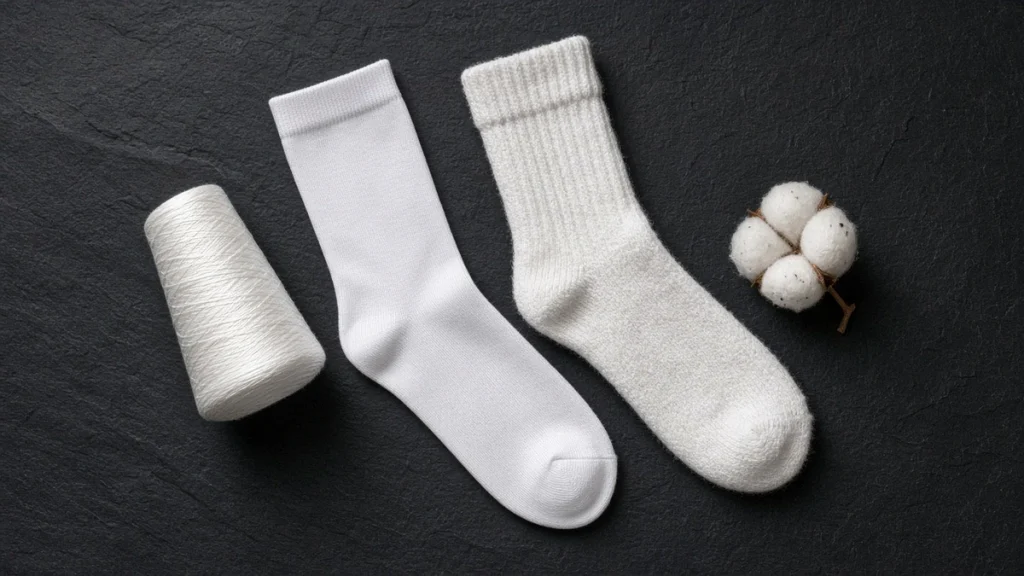
When planning digital printing socks, the first technical decision is fiber. Polyester and cotton behave very differently in printing, need different inks and finishing equipment, and appeal to different customers. This side-by-side comparison helps you choose where to start, or how to run both.
Color
Polyester: disperse inks produce very bright, saturated colors, excellent for bold graphics and neon-like tones.
Cotton: reactive inks produce rich, natural colors with excellent depth; extremely bright fluorescent effects are harder.
Feel and comfort
Polyester: smooth, quick-drying, often used in sports and performance socks.
Cotton: soft, breathable and familiar; preferred by many everyday and premium customers.
Workflow
Polyester: load, print, heat-fix, inspect, pack. Short and clean.
Cotton: pretreat, dry, load, print, steam or low-temperature fix, wash, spin dry, tumble dry, inspect, pack.
The cotton route is longer and needs more equipment, water and space. See printing cotton socks on a socks printer and using a socks printer on polyester socks.
Equipment
Polyester: socks printer plus heat-fixation oven, such as the COHE-1801.
Cotton: socks printer plus steamer or low-temperature oven, washer, spin dryer and tumble dryer from the pretreatment and finishing range.
Turnaround time
Polyester orders can be finished the same day. Cotton orders take longer because of washing and drying. For print-on-demand businesses promising fast shipping, polyester is often the default.
Cost per pair
Polyester typically has lower processing cost per pair due to fewer steps. Cotton adds pretreatment chemicals, water, energy for drying and labor. However, cotton socks can command premium prices with some customers.
Durability
Both are durable when processed correctly. Under-fixed polyester or poorly washed cotton prints will disappoint. Read how durable digital print socks are.
Blends
Many socks are blends. For disperse ink, higher polyester content gives brighter results; low polyester content prints pale. For reactive ink, higher cotton content gives better results. Choose blanks designed for your ink route; see choosing blank socks for digital printing.
Which should you start with?
Start with polyester if:
- You are new to sock printing.
- You sell print on demand with fast shipping.
- Your designs are bold and colorful.
- Space and utilities are limited.
Start with cotton if:
- Your brand is built around natural fibers.
- Your customers demand cotton.
- You already have washing and drying infrastructure.
Run both if:
- You serve diverse customers and have space for two routes.
Seeing results
Compare printed results on our printed polyester socks and printed cotton socks pages.
Choosing for your market
The right fiber depends on your customers:
- Sports and activewear buyers usually prefer polyester blends for moisture handling and bright colors.
- Everyday and gift buyers often ask for cotton for its familiar soft feel.
- Premium brands may offer both, letting customers choose.
Production differences in practice
Polyester has a shorter process: print, fix and pack. Cotton adds pretreatment, washing and drying. That means more equipment, space and time per pair. Many businesses start with polyester and add cotton once their workflow is stable. See pretreatment for cotton socks.
Testing before committing
Print the same design on both fibers, finish them correctly and compare color, feel and wash results. Show the samples to customers to learn which they prefer. Examples: printed polyester socks and printed cotton socks. For a list of questions and practical tips on testing new blanks, see choosing the right sock blank for your customers.
Running both fibers in one shop
Many businesses eventually offer both polyester and cotton. Keep the two flows clearly separated: label batches by fiber at the printer, send polyester to the oven and cotton to steaming, washing and drying, and use separate settings sheets. Mixing up routes is one of the most common causes of weak or bleeding prints. Plan extra time for cotton orders in your lead times, and explain to customers why cotton may take a little longer. See steaming vs oven fixation and washing and drying printed socks.
Frequently asked questions
Can one printer handle both fibers?
Each fiber needs its matching ink. Some businesses dedicate machines; others choose one primary route.
Which fiber photographs better?
Polyester's vivid colors often look striking in photos; cotton's natural look appeals to different audiences.
Is cotton printing harder?
It has more steps and variables, so it requires more process discipline.
Which fiber gives brighter colors? Polyester usually produces very bright, saturated colors with sublimation inks. Cotton with reactive inks can also look vivid, with a slightly softer appearance.
What about blends? Results depend on the main fiber. Test each blend before selling. See choosing blank socks for digital printing and blank cotton socks.
How should customers wash them? Inside out, moderate temperature, no bleach. See how durable are digital print socks.
Keep a reference pair of each fiber in the shop so operators can compare new batches quickly.
Conclusion
Digital printing socks on polyester is faster and simpler; cotton offers natural comfort and premium appeal with a longer workflow. Choose based on customers, space and experience. For guidance, explore the socks printer range or contact us.
Leave A Comment