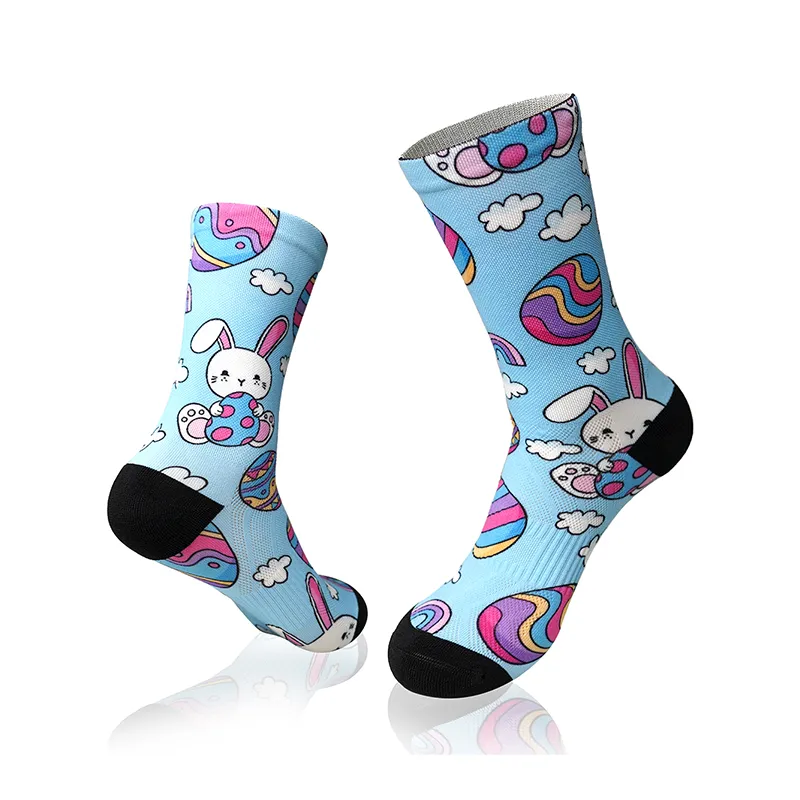
The sock blank you choose affects almost everything about the final product: how bright the colors look, how the sock feels, which ink you use, and how many steps your workflow needs. For most custom sock businesses, the first big decision is polyester or cotton.
Both can make excellent digital printing socks, but they behave very differently. This guide compares them side by side so you can choose the right blank for each product and customer.
The Short Version
- Polyester-rich socks are printed with disperse inks and generally have a simpler workflow. They’re known for vivid color.
- Cotton-rich socks are printed with reactive inks and usually need pretreatment and post-print finishing. They’re valued for a soft, natural feel.
The “right” choice depends on your product, your market, and your production setup.
Polyester Socks
How they print
Polyester is compatible with disperse inks. After printing, the ink is heat-set so it bonds with the fiber. The workflow is usually shorter than for natural fibers.
Strengths
- Bright, saturated colors, great for photos and bold patterns
- Simpler workflow, with fewer finishing steps
- Quick-drying and durable, which suits athletic socks
Things to consider
- Some customers prefer the feel of natural fibers for everyday wear.
- Breathability depends on knit construction, so choose blanks designed for comfort.
Best for
- Photo socks and gifts
- Sports and team socks
- Promotional and event socks
- Fast-turnaround POD orders
Cotton Socks
How they print
Cotton is typically printed with reactive inks. The usual workflow includes pretreating the blank before printing, then fixing the color after printing, for example by steaming, and then washing to remove excess ink and pretreatment. Exact steps depend on your supplier’s process.
Strengths
- Soft, natural feel that many customers prefer
- Strong appeal for everyday and premium socks
- Good fit for fashion and lifestyle brands
Things to consider
- More steps: pretreatment and finishing add time, equipment, and space.
- Color tuning: profiles and pretreatment both affect how bright the final color looks, so testing is important.
Best for
- Premium lifestyle socks
- Fashion brand collections
- Corporate gifts where comfort matters
- Customers who specifically ask for cotton
What About Blends?
Most socks aren’t 100% of one fiber. Blends with nylon and spandex are common for stretch and durability. The main printable fiber on the surface usually decides the ink system. For example, nylon-rich blends are commonly printed with acid inks. Always confirm the composition with your blank supplier and run tests before production.
Side-by-Side Comparison
| Factor | Polyester-rich | Cotton-rich |
|—|—|—|
| Ink type | Disperse | Reactive |
| Pretreatment | Usually not needed | Usually needed |
| Post-print steps | Heat setting | Fixing (e.g. steaming) and washing |
| Color impression | Very vivid | Depends on pretreatment and profile |
| Feel | Smooth, sporty | Soft, natural |
| Typical uses | Photo, team, promo socks | Lifestyle, premium, fashion socks |
Questions to Ask Before Choosing
- Who is the end customer? Gift buyers may care most about color. Fashion customers may care most about feel.
- What’s your turnaround promise? Simpler workflows help with speed.
- What space and equipment do you have? Cotton finishing needs room and extra equipment.
- How many SKUs can you manage? Offering both means managing two ink systems and workflows.
How Colorido Sock Printers Handle Both
Colorido sock printers, including the CO80-210PRO, CO60-100PRO, and CO80-600DK, are built for socks and other tubular products. The ink and finishing workflow is chosen to match the material. Talk to our team about the blanks you plan to use, and we’ll explain the full process for each.
Tips for Testing Blanks
- Print the same design on each candidate blank.
- Compare color, sharpness, and how the design looks when stretched.
- Wash samples as your customers would.
- Wear-test for comfort.
- Record settings for every test so results are repeatable.
FAQ
Which is better for photo socks, polyester or cotton?
Polyester is often chosen for vivid photos and a simpler workflow. Cotton can also work well with proper pretreatment and finishing.
Do cotton socks always need pretreatment?
Cotton printed with reactive inks typically needs pretreatment. Follow your supplier’s recommended process.
Can one sock printer print both?
Yes, with the right ink setup and workflow for each material. Plan how you’ll manage ink changes or dedicated machines.
What about bamboo or wool?
These natural fibers also need suitable ink and finishing. Test carefully and follow supplier guidance.
Choose With Your Customer in Mind
There’s no single best sock blank, only the best one for a specific product and customer. Many successful businesses offer both: polyester for vivid gifts and team socks, and cotton for premium everyday wear. See examples of both on our custom printed socks page.
Leave A Comment