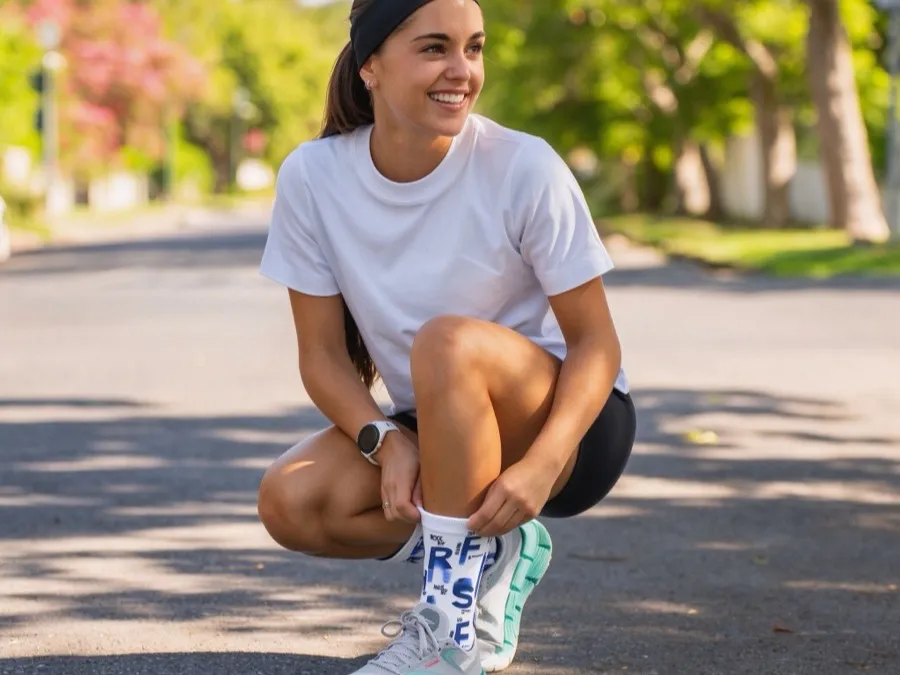
For decades, sock production followed a simple model: design a few styles, knit them in large quantities, and push them through retail. That model still exists, but a different kind of demand is growing next to it. Customers increasingly want products that feel made for them: their pet, their team, their company, their own design.
This shift toward personalization is changing how socks and other tubular textiles are designed, produced, and sold. Here’s what it means for manufacturers, print shops, and brands, and how they can adapt.
What’s Driving the Shift
Social media and self-expression
People share what they wear. A pair of socks with a pet’s face or a bold custom pattern is a conversation starter online and offline.
Online marketplaces and print-on-demand
Platforms such as Etsy and Shopify make it easy for small sellers to offer personalized products. Print-on-demand models remove the need to hold large inventories of finished designs.
Corporate and community branding
Companies, teams, clubs, and events look for merch that people actually use. Custom socks and accessories have become a popular choice.
Gift culture
Personalized gifts feel thoughtful. Photo socks, matching family sets, and name-printed items fit perfectly into birthdays, holidays, and milestones.
How It Changes Production
Smaller, more frequent orders
Instead of thousands of pairs of one design, many orders are dozens of pairs, or even a single pair. Production systems built for long runs can struggle with this.
More designs, faster changes
When every order is different, the setup cost of each design matters. Knitting new patterns or making screens for each design isn’t practical for small orders.
Shorter lead times
Personalized gifts are often tied to dates. Customers expect quick turnaround.
Wider product families
A customer who buys team socks may also want matching sweatbands, arm sleeves, or headwear. Personalization encourages coordinated sets.
Why Digital 360° Printing Fits
Digital printing socks and other tubular items address these changes directly:
- Designs come from files. Switching artwork between orders doesn’t require physical setup.
- Full-color, detailed images. Photos and gradients make true personalization possible.
- Seamless wrap. Rotary printing covers the tube without fold lines, which suits all-over designs.
- One workflow, many products. The same approach decorates socks, sweatbands, sleeves, headwear, and seamless activewear on suitable machines.
What Different Businesses Can Do
Sock factories
Factories that already knit blanks can add digital printing to offer customization services alongside traditional production. This opens the door to smaller brand orders without changing knitting lines.
Print shops and promo companies
Shops that print apparel can add socks and tubular accessories to their catalog. A compact machine like the CO80-600DK desktop sock printer can be a low-footprint starting point.
Custom brands and POD sellers
Brands that currently outsource can bring production in-house to control quality and turnaround. As volume grows, multi-roller machines like the CO60-100PRO and CO80-210PRO are designed to keep production moving.
Activewear makers
Seamless garment producers can use larger rotary printers, like the CO220-450MAX yoga-wear printer, to decorate leggings and tops without losing the seamless look.
Challenges to Plan For
Personalization isn’t automatic profit. Businesses need to manage:
- Design proofing. Every order needs approval, which takes time.
- Material workflows. Different fibers need different inks and finishing steps.
- Quality control. Each piece is unique, so consistency checks matter.
- Order management. Many small orders need good systems for tracking.
The businesses that do well invest in templates, clear processes, and reliable equipment.
Looking Ahead
Mass production isn’t going away, but personalization is creating a parallel market with different rules. Flexibility, speed, and design variety matter as much as unit cost. For sock and tubular textile makers, digital 360° printing is one of the most direct ways to serve this demand.
Curious what personalized products look like in practice? Explore our personalized socks page.
FAQ
Is personalization only for small businesses?
No. Factories and large brands can also add personalization services alongside traditional production.
Do personalized products need special equipment?
Digital printing is the most practical way to produce many unique designs, because each design is a file rather than a physical setup.
What products beyond socks benefit?
Sweatbands, arm sleeves, headwear, beanies, headbands, boxer briefs, and seamless yoga wear are all tubular items that suit 360° printing.
Leave A Comment