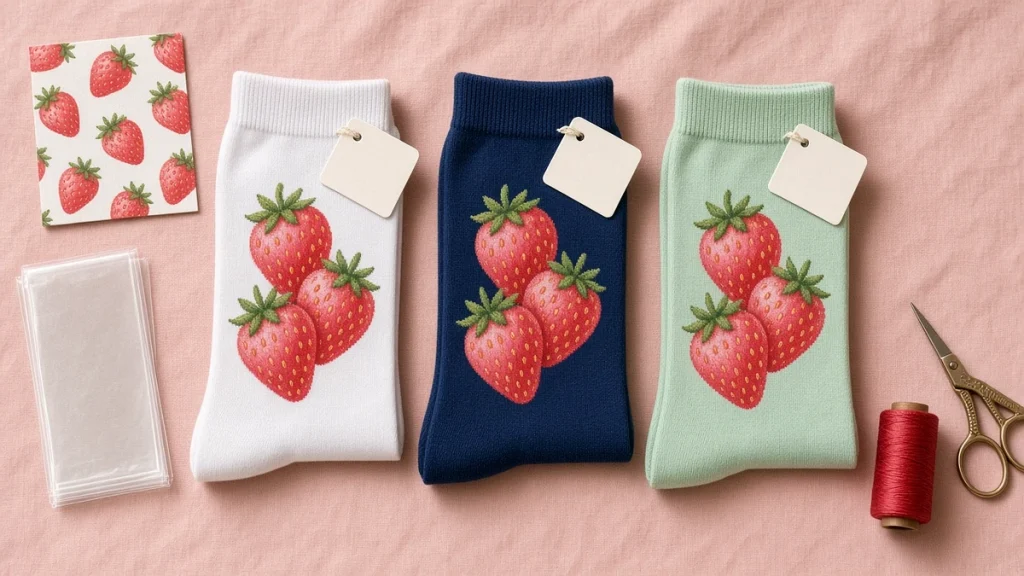
In the sock business, the first supplier to put a real sample in the buyer's hand often wins the order. Mockups and renderings help, but nothing replaces holding the actual sock. With traditional knitting or screen printing, sampling can take weeks. With a socks printer, it can take days. That speed is a competitive advantage that many businesses underuse.
Why sampling speed matters
- Buyers compare several suppliers; a fast sample keeps you in the conversation.
- Seasonal and event orders have fixed deadlines.
- Faster iterations mean the final design is better.
- Quick samples show professionalism and reliability.
How digital printing speeds up sampling
A socks printer prints directly from a file. There is no screen preparation, no knitting program and no yarn sourcing for each color. You can print one pair, adjust the design and print again within hours. That makes it possible to send a client two or three color variations at once and let them choose.
Building a sampling process
1. Clear briefs. Collect artwork, sock size, fabric, quantity, deadline and any brand color references.
2. Mockups first. Send a digital mockup on a sock template for quick approval of layout.
3. Print on the production fabric. Always sample on the blank you will use in production; results on other fabrics can mislead.
4. Finish completely. Fix and, for cotton, wash and dry exactly as in production. Samples that skip finishing may look different from final goods.
5. Photograph and ship. Send photos immediately, then ship physical samples by express courier.
6. Record settings. Save the exact profile, print mode and file version so production matches the approved sample.
Using a dedicated sample machine
Production lines do not like interruptions. Many factories and larger print rooms keep a compact machine, such as a desktop socks printer, for sampling. Designers can test freely without stopping the main line. See is a desktop socks printer right for a small studio.
Offering variations
Sampling is a chance to upsell. Alongside the requested design, offer:
- A variation in a different color scheme.
- A matching sleeve or headband.
- A personalized version with names or numbers.
Clients often order more than planned once they see options.
Sampling for brand colors
When clients care about exact colors, include a small swatch strip showing their key colors on your fabric. Agree on the approved swatch before production. Our color management guide explains why fabric colors differ from screens.
Turning samples into orders
- Follow up within a day of delivery.
- Provide clear pricing for different quantities.
- Offer a production timeline based on your actual capacity.
- Make reordering easy by saving the approved file and settings.
Costing samples
Some businesses charge for samples and credit the cost against the order; others offer free samples for qualified leads. Track sampling costs and conversion rates so you know what works.
The bigger picture
Fast sampling is part of a broader shift toward responsive production. Brands increasingly prefer suppliers who can test designs quickly and produce small runs. Our article on low MOQ custom socks explains this trend.
Turning samples into orders
Fast samples only win business if they are presented well. A sample should arrive with a short note confirming the design reference, fiber, size and any notes on color. Include care instructions and a clear next step, such as a quote valid for a set period and the expected lead time for bulk production.
A sampling workflow
- Receive the brief: artwork, sock type, sizes and target quantity.
- Check artwork for resolution and wrap, and prepare a mockup. See preparing artwork for a socks printer.
- Print and finish the sample using the same settings you would use for bulk.
- Inspect and photograph the sample on a neutral background.
- Send the physical sample and photos, and follow up within a few days.
Why matching bulk matters
A sample printed with special care but not representative of production creates problems later. Use the same blanks, RIP presets and fixation settings for samples and bulk. Keep the approved sample as the reference for quality checks during the order.
Pricing samples
Some businesses charge for samples and credit the cost against the first order. This filters out casual requests while keeping serious buyers happy. Decide on a clear policy and state it in quotes.
Learning from samples
Track how many samples turn into orders and why others do not. Common reasons include price, color expectations or timing. This data helps you improve both your offer and your process.
Speed as a selling point
Many traditional suppliers need weeks to produce a sample. With a socks printer you can often turn samples around much faster, which is valuable to buyers working to deadlines. See low MOQ custom socks and adding a socks printer to a traditional sock factory.
Conclusion
A socks printer turns sampling from a weeks-long process into a matter of days. Build a structured process, sample on production fabric, finish fully and record every setting. Fast, accurate samples win orders. To see real examples, browse our applications gallery, or contact us to discuss sampling equipment.
Leave A Comment