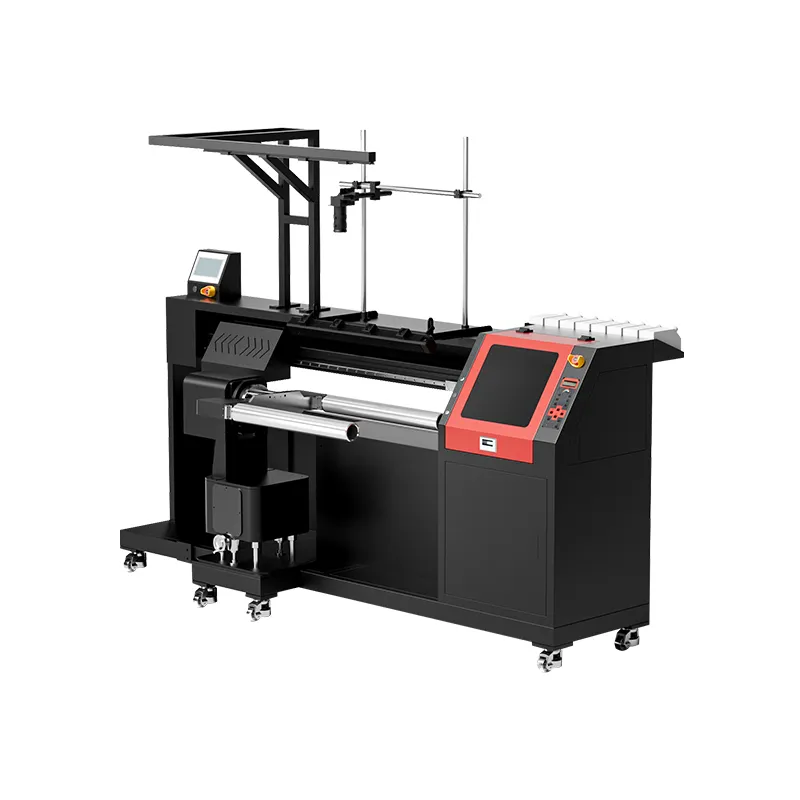
For many custom product businesses, a few weeks of the year make all the difference. Holiday gift orders, back-to-school team socks, and event merch can all arrive at once. That’s exactly when an unplanned stop hurts most.
A little preparation before the rush keeps your 360° sock printer running smoothly when you need it most. Here’s a practical care plan for shops printing custom socks, sweatbands, arm sleeves, and other tubular products.
Step 1: Do a Deep Clean Before the Busy Weeks
Start the season with a clean machine. Go beyond your daily routine:
- Clean every roller station thoroughly.
- Clean the capping and wiper area carefully, and replace worn capping pads or wipers if needed.
- Remove lint and ink mist from rails, covers, and the area around the printheads (without wiping the nozzle surface itself).
- Empty the waste ink container.
- Run nozzle checks and test prints on your most common blanks.
Follow your machine’s manual for any parts that need a technician.
Step 2: Stock Up on Consumables
Shortages are a common bottleneck during peaks. Check your stock of:
- Ink for each material you print (for example, the inks you use for polyester and for cotton or nylon blends)
- Cleaning solution
- Capping pads, wiper blades, and other wear parts your supplier recommends keeping
- Lint-free cloths, swabs, and gloves
- Pretreatment and finishing supplies, if your workflow needs them
Order early, and allow time for international shipping. Store ink in a cool place away from direct sunlight, and use older stock first.
Step 3: Stock Up on Blanks
Popular sizes and colors run out fast. Review last season’s orders (or your best estimates) and secure enough sock blanks, sweatbands, and sleeves. Keep blanks covered to reduce dust and lint.
Step 4: Review Your Workflow
Peak season exposes slow steps. Walk through the full process:
- Order intake and design proofing
- File preparation and RIP
- Loading and printing
- Curing or heat setting
- Any steaming, washing, or finishing steps
- Quality check, packing, and shipping
Find the slowest step. On multi-roller machines like the four-roller CO80-210PRO or the twin-roller CO60-100PRO, loading the next product while another prints helps keep the sock printer busy. Make sure the downstream steps can keep up.
Step 5: Train a Backup Operator
If only one person knows how to run and maintain the sock printer, that’s a risk. Before the rush:
- Train at least one more team member on daily start-up, shutdown, and cleaning.
- Write a one-page quick guide and keep it next to the machine.
- Make sure everyone knows the most important rule: protect the printheads by keeping them capped when idle.
Step 6: Set Up Templates
Templates save time and reduce errors:
- Standard layouts for popular products (pet socks, team numbers, logo repeats)
- Saved RIP settings and color profiles for each material
- File naming rules so the right design reaches the right roller
Step 7: Plan for Downtime, Just in Case
Even well-maintained machines can need attention. Prepare:
- Your supplier’s support contacts, saved and shared with the team
- A list of the most likely spare parts, kept on hand
- A rough plan for prioritizing orders if production slows
If you run more than one machine, such as a compact CO80-600DK for samples next to a larger production sock printer, know which jobs can move between them.
Step 8: Protect the Environment
Busy rooms get dusty, and doors open often. Keep the sock printer area clean and the temperature and humidity within your manual’s recommended range. Avoid placing the machine near drafts, heaters, or direct sunlight.
During the Rush: Keep the Basics
When orders are piling up, it’s tempting to skip cleaning. Don’t. Daily shutdown care takes minutes and protects the printheads. Shortened routines are fine during the rush, but keep:
- A cleaning cycle and capping check at the end of each day
- Regular lint removal from rollers and the wiper area
- A quick nozzle check at the start of each shift
After the Rush
Once the peak is over, do another deep clean, review your maintenance log, and note what slowed you down. Use those notes to plan the next season.
FAQ
When should I start preparing for peak season?
Several weeks ahead is wise, especially if you need to ship consumables or blanks internationally.
What’s the most important thing to protect during busy periods?
The printheads. Keep them capped and properly maintained every day.
Should I keep spare parts on hand?
Yes. Ask your supplier which wear parts are worth keeping in stock.
Ready for Your Busiest Season
A prepared machine and a prepared team make peak season less stressful and more profitable. For product inspiration for your busy months, see our custom printed socks page.
Leave A Comment