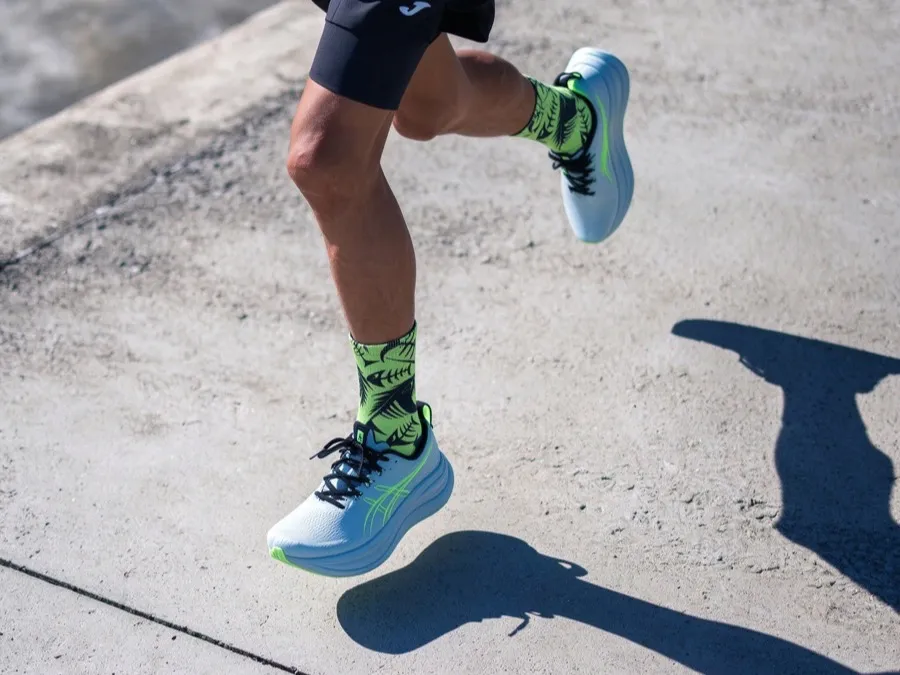
Anyone entering the custom sock market quickly faces a choice: heat-press sublimation or 360° rotary digital printing? Both can produce colorful custom printed socks, but they work in very different ways and suit different businesses.
This article compares the two approaches for socks and other tubular textiles like sweatbands, arm sleeves, and headwear. The goal is to help you decide which method matches your products, materials, and growth plans.
How Each Method Works
Heat-press sublimation
The design is first printed onto transfer paper with sublimation ink. The sock is placed on a flat jig, the paper is positioned on it, and a heat press transfers the dye into the fabric. Usually both sides are pressed, one after the other.
360° rotary digital printing
The finished sock is pulled onto a roller. The sock printer applies ink directly as the roller rotates, wrapping the design around the tube in one continuous pass. Depending on the material, the sock then goes through curing and possibly other finishing steps.
Key Differences
1. Seam lines and coverage
Because pressing works on a flattened sock, the design typically meets at the folded edges, where faint lines or gaps can appear. Rotary printing wraps the design around the tube, so there are no fold lines to hide.
2. Material compatibility
Sublimation dye bonds with polyester, so it’s generally used on polyester-rich socks. Rotary digital printing can be paired with different ink types for different fibers: disperse inks for polyester, and reactive or acid inks for cotton, nylon, wool, and similar fibers, with the right pretreatment and finishing.
3. Base color
Sublimation dye is transparent, so it works best on white or very light socks. With rotary digital printing, the options depend on the ink system and material, so check with your supplier if dark or colored blanks are important to you.
4. Hand feel
Sublimation leaves no added layer on the fabric. With direct digital printing, the feel depends on the ink and process used. Test samples to compare.
5. Workflow and labor
Pressing involves printing paper, positioning, pressing each side, and peeling. Rotary printing removes the paper and pressing steps, though it may add pretreatment or finishing depending on the fiber. Multi-roller machines also let operators load the next product while another prints.
6. Investment and scale
Small sublimation setups can be inexpensive to start with. Rotary sock printers are a larger investment designed for production, so they suit businesses planning steady volume or a wider material range.
Quick Comparison
| Factor | Heat-press sublimation | 360° rotary digital |
|—|—|—|
| Coverage | Two sides, possible edge lines | Continuous wrap |
| Main materials | Polyester-rich | Polyester, cotton, nylon, wool and blends (with matching ink) |
| Extra consumables | Transfer paper | Pretreatment/finishing for some fibers |
| Best for | Simple start, polyester products | Production, wider materials, seamless designs |
Which Is Right for You?
Choose sublimation pressing if:
- You’re testing the market with a small budget
- Your products are mainly polyester
- Light-colored socks fit your designs
- Some visible edge lines are acceptable
Choose 360° digital printing if:
- You want seamless, full-wrap designs
- Your customers ask for cotton or other natural-fiber blends
- You plan steady or growing production
- You want to add sweatbands, arm sleeves, headwear, or activewear
Where Colorido Sock Printers Fit
Colorido focuses on 360° rotary printing for tubular textiles. Our lineup covers different stages of growth:
- CO80-600DK: compact desktop sock printer for studios and small runs
- CO60-100PRO: twin alternating rollers
- CO80-210PRO: four alternating rollers for batch production
- CO70-220PRO: open single-arm design, also for tubular headwear
- CO220-450MAX: yoga-wear printer with large rollers
The Bigger Industry Picture
Personalization keeps pushing the textile industry toward shorter runs and more design variety. Both pressing and rotary digital printing serve that trend, but rotary printing is built for tubular products specifically, which is why it’s increasingly common among dedicated custom sock producers. For a look at the finished results, see our digital printed socks.
FAQ
Is sublimation the same as digital printing?
Sublimation uses digitally printed transfer paper, but the design is applied with a heat press. Rotary digital printing applies ink directly to the sock.
Can sublimation print cotton socks?
Sublimation is generally used for polyester. Cotton usually needs other ink types with pretreatment and finishing.
Why do pressed socks sometimes show lines on the sides?
Pressing works on a flattened sock, so the design meets at the folded edges.
Which method is faster?
It depends on volume, materials, and workflow. Multi-roller rotary machines are designed for continuous production.
Leave A Comment