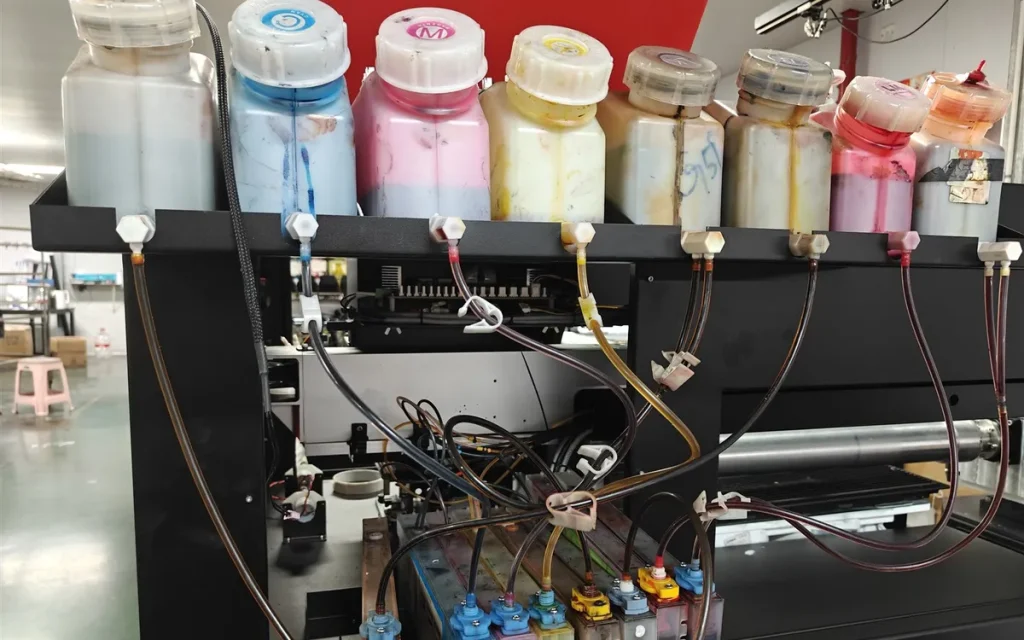
Ink choice is one of the most important decisions for a digital socks printer, because it determines which fibers you can print and what finishing equipment you need. This guide summarizes the main ink families used in textile printing and how they apply to socks.
Disperse ink
Fibers: polyester and polyester-rich blends.
Fixation: heat in a sock oven.
Washing: typically not required.
Strengths: vivid colors, short workflow, good wash fastness when fixed correctly.
Considerations: pale results on low-polyester blends.
Disperse ink is the most common choice for printed socks. See using a socks printer on polyester socks.
Reactive ink
Fibers: cotton, bamboo viscose and other cellulose fibers.
Fixation: steam or low-temperature oven after pretreatment.
Washing: required to remove unfixed dye and chemicals.
Strengths: rich, natural colors with soft hand feel on cotton.
Considerations: longer workflow, more equipment.
See printing cotton socks on a socks printer.
Acid ink
Fibers: nylon, wool and silk.
Fixation: steam.
Washing: required.
Strengths: bright colors on protein and polyamide fibers.
Considerations: specific pretreatment and finishing.
Useful for wool socks and nylon-rich products.
Pigment ink
Fibers: many, including blends.
Fixation: heat, often with binders.
Washing: often not required.
Strengths: versatility across fibers.
Considerations: can affect hand feel and stretch on knitted socks; less common for premium sock printing.
Matching ink to your business
- Mostly polyester socks and fast turnaround: disperse.
- Premium cotton socks: reactive.
- Wool or nylon specialty socks: acid.
Many businesses start with one ink and add another later, sometimes on a separate machine to avoid changeovers.
Ink handling and storage
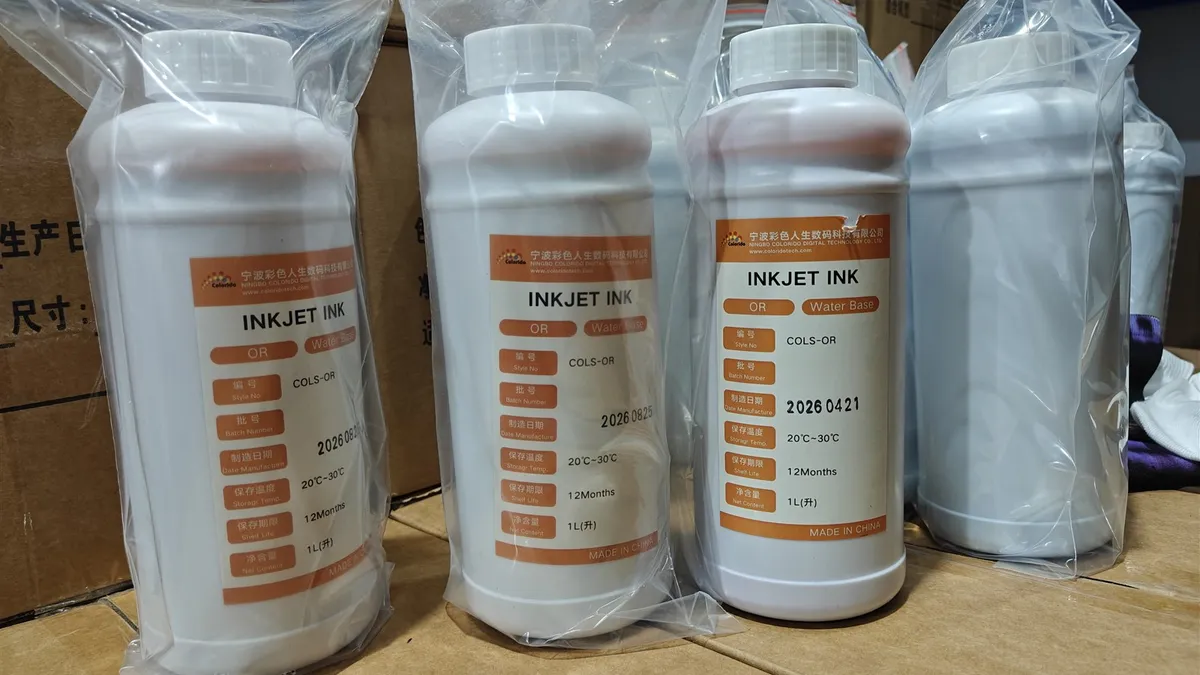
- Store in cool, dark conditions.
- Follow shelf-life guidance.
- Never mix ink types in one system.
- Agitate if recommended.
Good ink handling protects printheads. See printhead care.
Color profiles per ink
Each ink and fabric combination needs its own color profile. See socks printer color management.
Ink and printhead compatibility
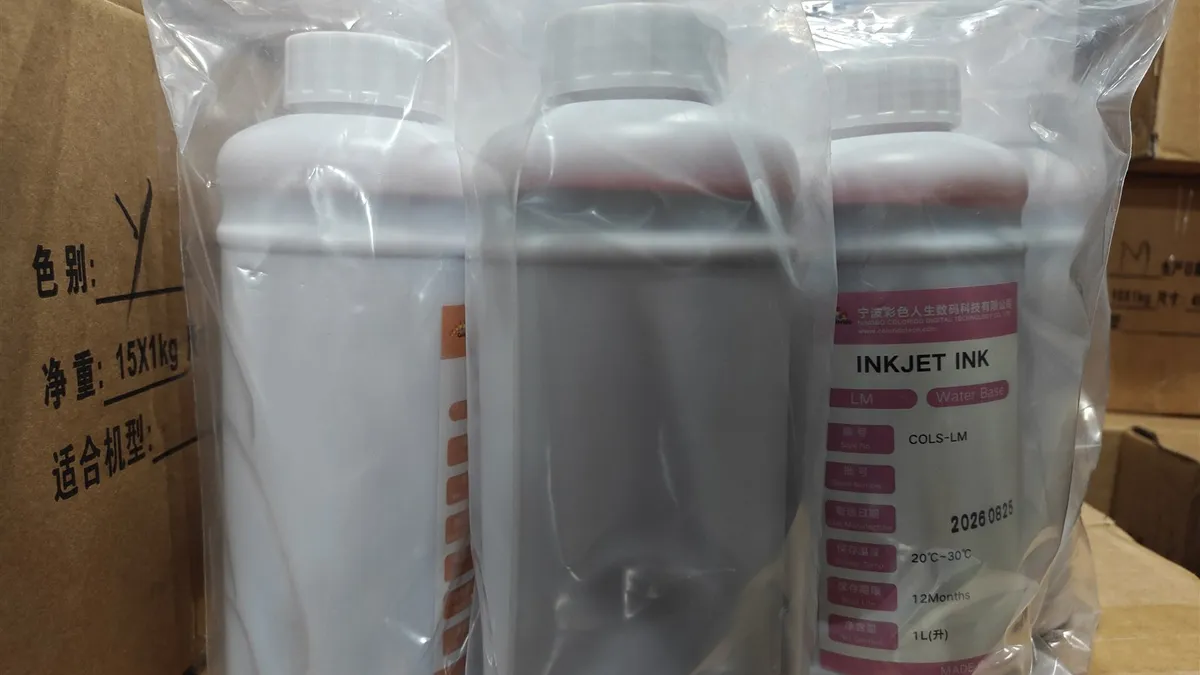
Ink is not just about fiber; it must also suit the printheads and the ink system. Viscosity, surface tension and particle size all affect how reliably ink fires through the nozzles. Using an ink that is not approved for your heads can lead to clogging, poor drop formation or damage. Always use inks recommended or validated by your machine supplier, and ask before switching brands.
Planning for more than one ink
If you plan to print several fibers, think about how to organize production:
- Dedicated machines per ink: the simplest approach for businesses with steady demand in each fiber. No flushing, no risk of mixing, and each machine keeps its tuned profiles.
- One primary ink: many businesses focus on one fiber, typically polyester, and outsource or decline other fibers until volume justifies a second line.
- Scheduled changeovers: possible but disruptive, consuming ink and time for flushing and requiring careful procedures.
Your choice also affects finishing equipment. A disperse line needs a heat-fixation oven; a reactive line needs pretreatment, steaming or a low-temperature oven, and washing and drying. Plan both the printer and finishing together; our guide to planning a production line can help.
Testing a new ink
Before switching inks, print test charts and typical designs, fix and finish them, wash test them and compare color, hand feel and durability with your current standard.
Handling and storing inks
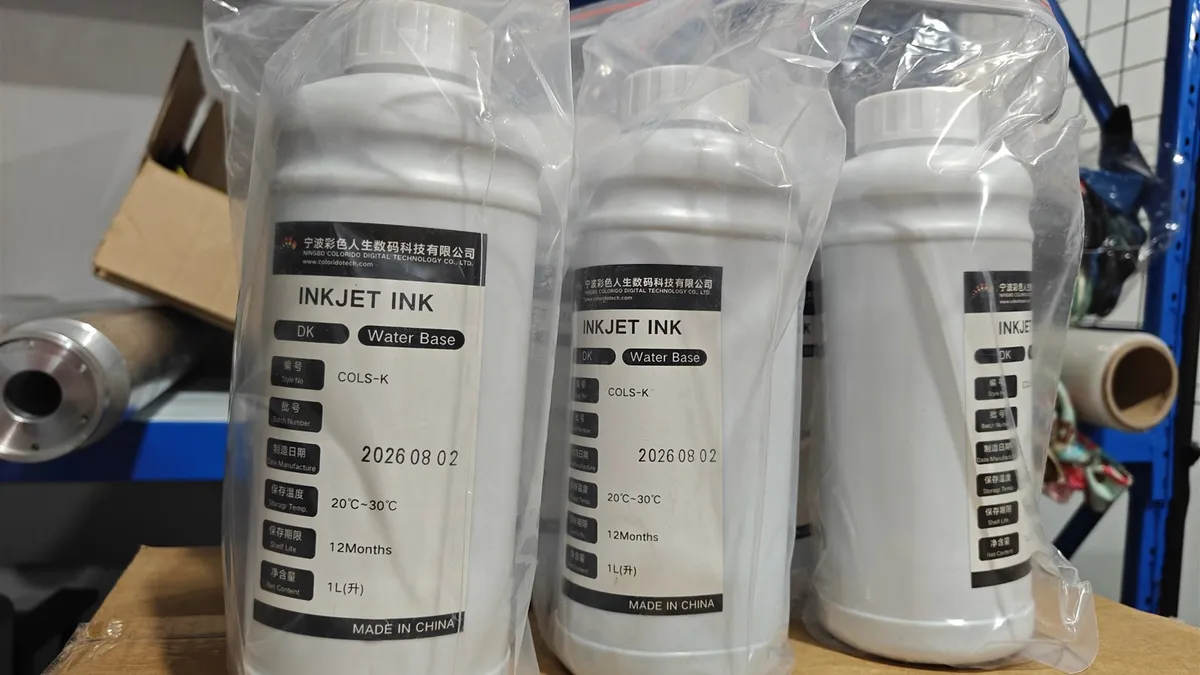
Inks are sensitive to temperature, light and contamination. Store them in a cool, dark place within the range given by the supplier, keep containers sealed and use older stock first. Shake or agitate only if the supplier recommends it. Never mix inks from different suppliers or series in the same system, and keep a record of batch numbers so you can trace any quality change.
Changing ink types
Switching a digital socks printer from one ink type to another, for example from disperse to reactive, usually requires flushing the ink system and may need different printhead settings or parts. Discuss any change with your supplier first. Many businesses dedicate machines to one ink type to avoid this.
Ink and color profiles
Each ink set behaves differently on each fiber, so color profiles should be built for the specific ink, blank and fixation combination. See color management for a socks printer. Ink-path parts such as the ink tank, ink pump and ink tube also need regular checks.
Ask your supplier for the safety data sheet for each ink and keep it accessible to all operators.
Frequently asked questions
Can I switch inks on the same printer?
It is possible but requires flushing and changes; many businesses avoid frequent switching.
Which ink is most durable?
Each is durable on its matching fiber when fixed correctly.
Do inks affect the printhead choice?
Printheads must be compatible with the ink; follow supplier recommendations.
Conclusion
The right ink for your digital socks printer depends on fiber: disperse for polyester, reactive for cotton, acid for nylon and wool. Plan finishing to match. Explore our socks printer range and finishing equipment, or contact us.
Leave A Comment