Digital printing has transformed textiles over the past two decades, from fashion fabrics to home furnishings. For sock makers, it is the technology behind seamless, full-color printed socks. This introduction explains the basics in plain language so that sock businesses can understand what happens inside their machines and why each step matters.
What digital textile printing is
Digital printing applies ink to fabric directly from a digital file using inkjet printheads. Unlike screen or rotary screen printing, there are no screens or engraved cylinders. Each image can be different, and changing designs costs nothing in setup.
How inkjet works
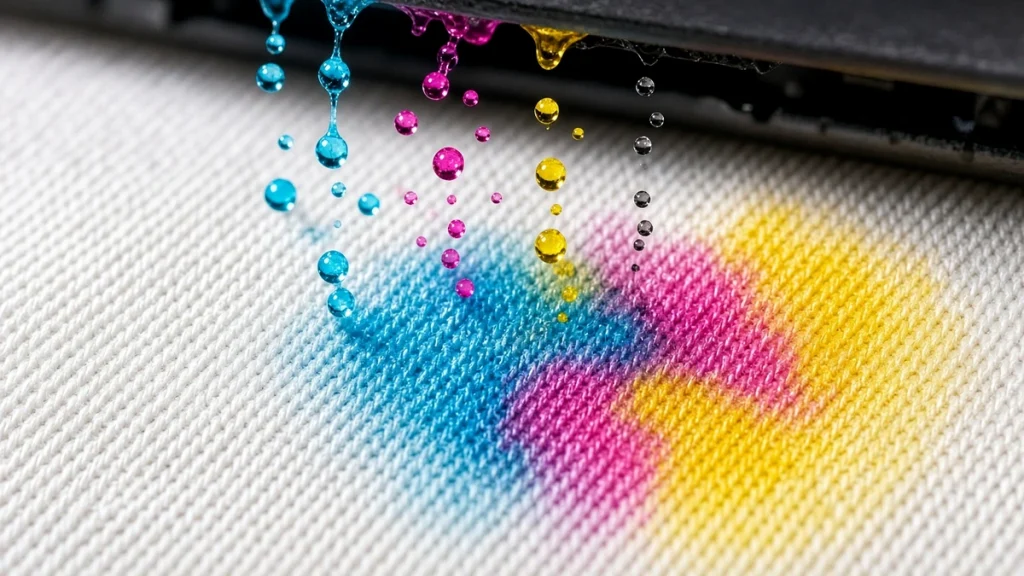
Inkjet printheads contain hundreds or thousands of tiny nozzles. Each nozzle fires droplets on command. By controlling which nozzles fire and how much ink they release, the printer builds an image from dots of cyan, magenta, yellow, black and sometimes extra colors. Software called a RIP converts designs into these firing instructions. See RIP software and your socks printer.
Ink families
Different fibers need different inks:
- Disperse inks for polyester; fixed with heat.
- Reactive inks for cotton and other cellulose fibers; fixed with steam or controlled heat, then washed.
- Acid inks for nylon, wool and silk; fixed with steam, then washed.
- Pigment inks for many fibers; fixed with heat, usually with a binder.
Socks are most commonly printed with disperse or reactive inks. Read digital socks printer inks for detail.
Pretreatment
Some fabrics need treatment before printing so the ink bonds properly and stays sharp. Cotton printed with reactive ink typically needs pretreatment. Polyester printed with disperse ink usually does not.
Fixation
Fixation makes the print permanent. For disperse ink, heat drives dye into polyester fibers. For reactive ink, steam or low-temperature heat triggers a chemical bond with cotton. Without proper fixation, colors are weak and wash out.
Washing and drying
Reactive and acid prints are washed after fixation to remove unfixed dye and chemicals, then dried. This step affects final color and hand feel.
Flat vs rotary digital printing
Most textile digital printers print flat fabric rolls. Socks are tubes, so sock printing uses rotary machines that print on rollers, wrapping designs seamlessly. See rotary socks printer explained.
Benefits for sock makers
- No minimum orders.
- Full color and photo detail.
- Fast sampling.
- Personalization.
- Less inventory.
Limitations to understand
- Inks are transparent; white blanks give the best color.
- Fixation and finishing equipment are essential.
- Printheads need routine maintenance.
- Color management requires attention.
Where digital printing is heading
Textile digital printing keeps improving in speed, reliability and ink performance. Software is becoming more automated, with better color management and workflow tools. For sock makers, that means more consistent results with less manual adjustment.
Key terms for sock makers
Understanding a few terms makes conversations with suppliers easier:
- Printhead: the part that fires tiny ink drops onto the fabric. Its condition affects sharpness and banding.
- Resolution: how finely the printer places drops, usually stated in dots per inch.
- RIP software: converts artwork into instructions for the printer and manages color profiles. See RIP software and your socks printer.
- ICC profile: a color description that helps match print output to design intent.
- Fixation: the heat or steam step that bonds ink to the fiber.
- Pretreatment: preparing fabric, especially cotton, so ink reacts correctly.
Matching ink to fiber
Textile inks are chosen by fiber. Disperse or sublimation inks suit polyester; reactive inks suit cotton and other cellulose fibers; acid inks are used for fibers such as nylon, wool and silk. Using the wrong ink gives weak or non-durable results. Read digital socks printer inks for detail.
Why socks are special
Most textile printers print flat fabric. Socks are tubular, stretchy and already sewn, so they need a rotary approach where the sock rotates on a roller under the printheads. This allows seamless wraparound designs. See rotary socks printer explained.
Quality basics
Good digital textile printing depends on consistent conditions: the same blanks, inks, settings and finishing every time. Small changes in any of these can change color. Keep records and test whenever something changes. Our color management guide explains how.
Where to start
If you are new to textile printing, start with polyester socks, which have a simpler process, and add cotton once your workflow is stable. Browse our socks printer range and pretreatment and finishing equipment.
Frequently asked questions
Is digital printing more expensive than screen printing?
For short runs and complex designs, usually not; for very long runs of simple designs, screen printing can be cheaper per piece.
Is digital printing environmentally better?
It reduces setup waste and overproduction, though inks, energy and washing still have impacts. See sustainable sock printing.
Do I need a chemistry background?
No. Suppliers provide inks, procedures and training; operators follow tested routines.
Is digital textile printing the same as paper printing? The principles are similar, but textile inks, fixation and fabric behavior make it a different process.
Conclusion
Digital printing for textiles uses inkjet heads, fiber-specific inks, pretreatment and fixation to produce permanent, full-color designs from digital files. For socks, rotary machines bring these benefits to tubular products. Explore our socks printer models and production process, or contact us with questions.
Leave A Comment