Ask three custom sock suppliers for a quote and you may get three different production methods: woven (knitted), sublimated, or 360° digitally printed. Each one produces a good sock, but they suit different designs, budgets and order sizes.
This guide compares the three side by side so you can choose the right method for each project rather than the one a supplier happens to offer.
Method 1: Woven (Knitted) Socks
How they’re made
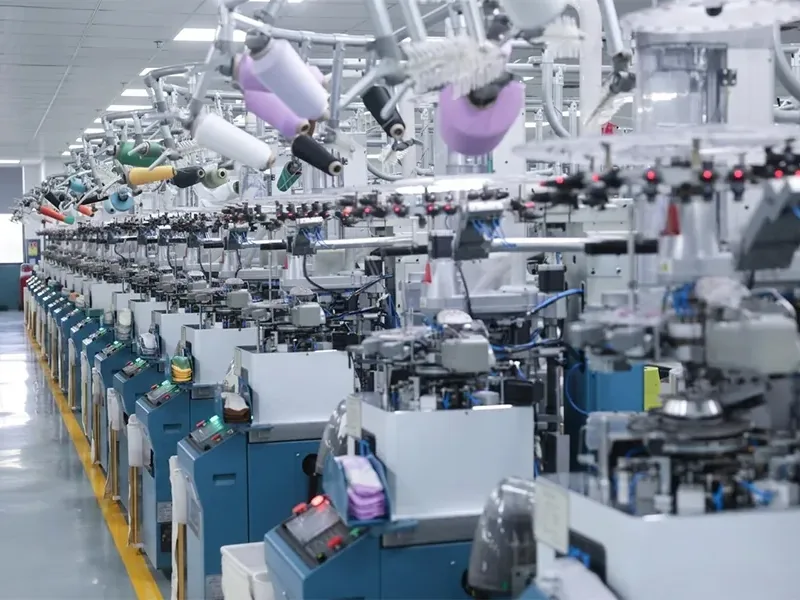
The design is knitted into the sock with different colored yarns on a computerized knitting machine. “Woven,” “knitted” and “jacquard” usually refer to this method.
Strengths
- The design is part of the fabric, so it can’t wash off
- Classic textured look
- Works across many yarns, including cotton, bamboo, wool and nylon blends
Limits
- A limited number of yarn colors per design
- Photos, gradients and fine detail are difficult or impossible
- Each new design needs a knitting program and setup
Best for
Simple logos, stripes, brand-color patterns and core styles reordered in large volume.
Method 2: Sublimated (Heat-Press) Socks
How they’re made
The artwork is printed onto transfer paper with sublimation ink. The sock is placed on a flat jig and pressed so the dye moves into the polyester fibers. Usually each side is pressed separately.
Strengths
- Full color, including photos and gradients
- Smooth surface with no added ink layer
- Low equipment cost to get started
Limits
- Works mainly on polyester-rich socks
- Works best on white or very light socks
- Pressing a flattened sock can leave faint lines or gaps at the folded edges
Best for
Photo and novelty socks on white polyester blanks where small edge lines are acceptable.
Method 3: 360° Digitally Printed Socks
How they’re made
The finished sock is pulled onto a roller, and a rotary sock printer applies ink directly as the roller turns. The design wraps around the whole sock in one continuous pass. Color is then fixed: heat setting for polyester, steaming and washing for cotton and nylon.
Strengths
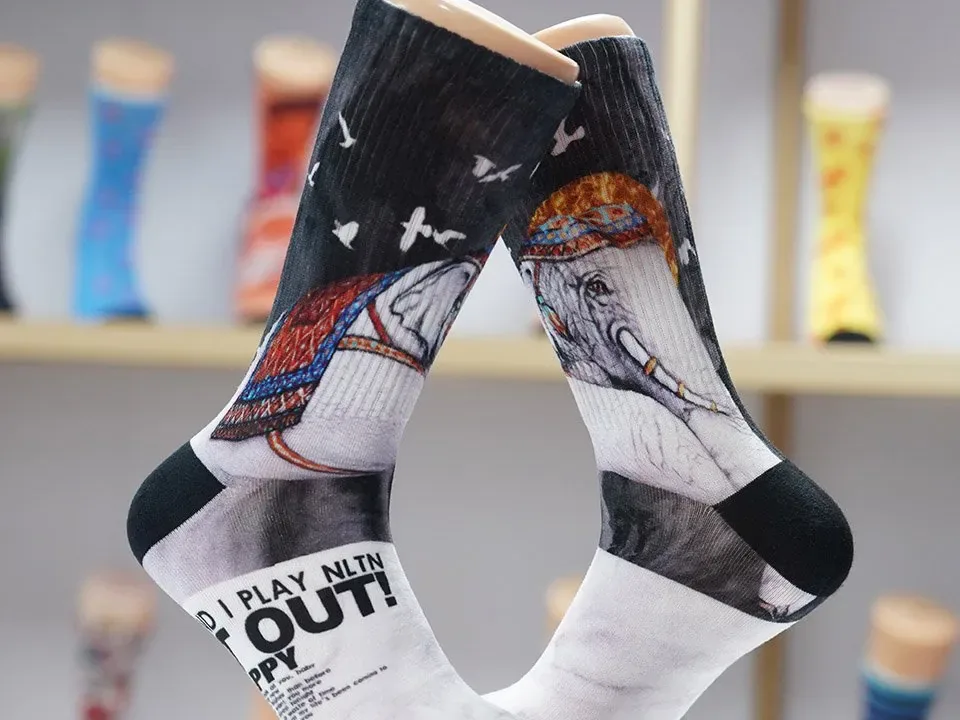
- Full color with seamless wrap and no side lines
- Works on polyester, cotton, nylon, wool and blends with matching inks
- Designs change by file, so short runs and many designs are practical
Limits
- Natural fibers need pretreatment and extra finishing steps
- Feel and durability depend on fiber, ink and finishing, so sampling matters
Best for
All-over artwork, photo socks, seasonal designs, personalized orders and mixed-design bulk orders.
Side-by-Side Comparison
| Factor | Woven (knitted) | Sublimated (pressed) | 360° digitally printed |
|---|---|---|---|
| Photos and gradients | No | Yes | Yes |
| Seamless wrap | Yes (knitted in) | Side lines possible | Yes |
| Main fibers | Most yarns | Polyester-rich | Polyester, cotton, nylon, wool and blends |
| Setup per design | Knitting program | Transfer printing | Digital file |
| Look and feel | Textured | Smooth | Depends on fiber and finishing |
| Durability | Design is the fabric | Dye inside polyester | Depends on fixing and washing |
| Typical fit | Large repeat runs, simple logos | White polyester novelty socks | Artwork-heavy, multi-design, short to bulk runs |
How to Choose
Ask yourself four questions:
- Does the design rely on photos, gradients or fine detail? If yes, choose sublimated or 360° printed.
- Does the customer need cotton or another natural fiber? If yes, choose woven or 360° printed.
- Will you have many designs or frequent changes? If yes, choose 360° printed.
- Is it one simple logo reordered in huge volume? If yes, woven is often a strong fit.
Mixing Methods in One Program
Many brands use more than one method:
- Woven socks for the core logo line
- 360° printed socks for seasonal drops, collaborations and photo gifts
- Matching printed accessories, such as wrist sweatbands and cooling arm sleeves, for team or event kits
Where Colorido Fits
Colorido builds rotary sock printers and prints 360° custom printed socks on them. Our production process page shows the steps from blank to finished pair, and our article on sublimation pressing vs 360° digital printing goes deeper on that comparison.
If you’re weighing in-house production, our sock printer lineup lists reference output per model. For example, the four-roller CO80-210PRO is rated at 50–120 pairs/hour and the twin-roller CO60-100PRO at 40–65 pairs/hour. Reference output varies with print mode, artwork, material, workflow and configuration.
FAQ
Is woven the same as jacquard?
In custom socks, the terms are usually used for the same knitted-in method.
Which method lasts longest?
Woven designs are part of the fabric. For printed socks, durability depends on the fiber and how thoroughly the color is fixed and washed. Wash-test samples.
Can I print on dark socks?
Sublimation works best on light polyester. For 360° printing, discuss your base color and fiber with the supplier and test a sample.
Which is cheapest?
It depends on design complexity, fiber, quantity and finishing. Compare quotes for the same specification rather than by method alone.
Choose by Design, Not by Habit
The right method depends on your artwork, fiber and order pattern. Start with our custom printed socks if your design needs full color and seamless wrap.
Leave A Comment