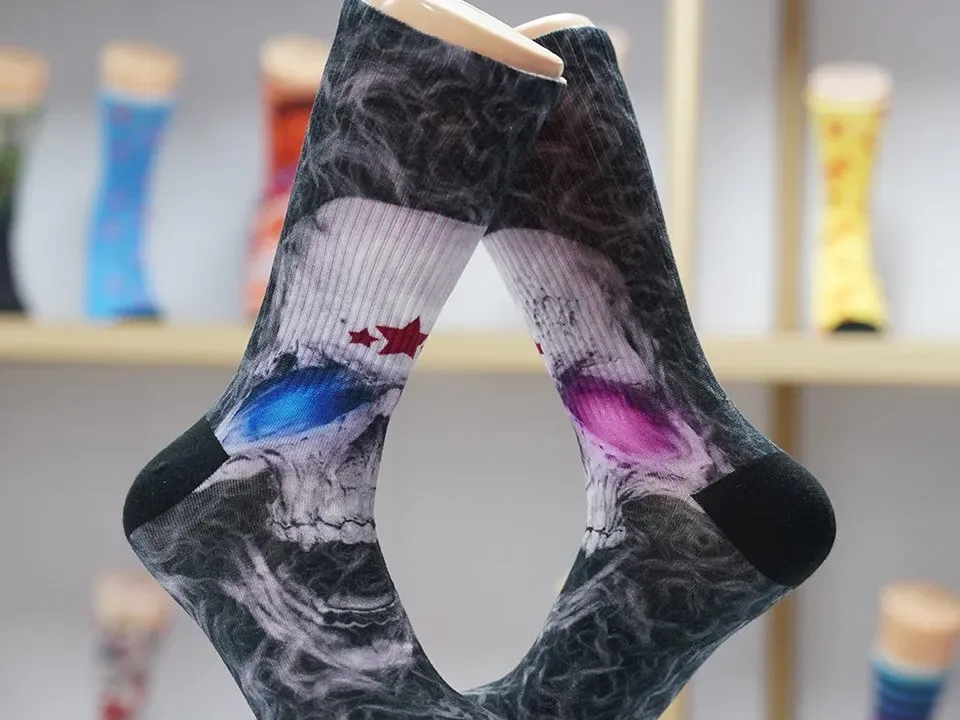
The sample is the most important moment in any custom sock order. Once you approve it, the factory will repeat it hundreds or thousands of times. A rushed approval can lock in a color shift, a misplaced logo, or a fit problem across the entire run.
This checklist is written for brands, promotional distributors, retailers and team buyers approving digital printed socks before bulk production. Use it alongside your supplier’s own quality process, and see our artwork file prep checklist for getting files right before sampling.
Before the Sample Arrives
Prepare three things so your review is objective:
- The approved artwork file and any color references you supplied
- Your target use (retail, giveaway, team wear, gift) so you know which points matter most
- A simple scoring sheet listing the ten points below
The 10-Point Checklist
1. Color against your reference
Check the sample under daylight or a neutral light, not just office lighting. Compare it with your reference, not with your screen, since screens and fabric show color differently. If brand colors matter, tell the supplier exactly which elements must match most closely.
2. Sharpness and detail
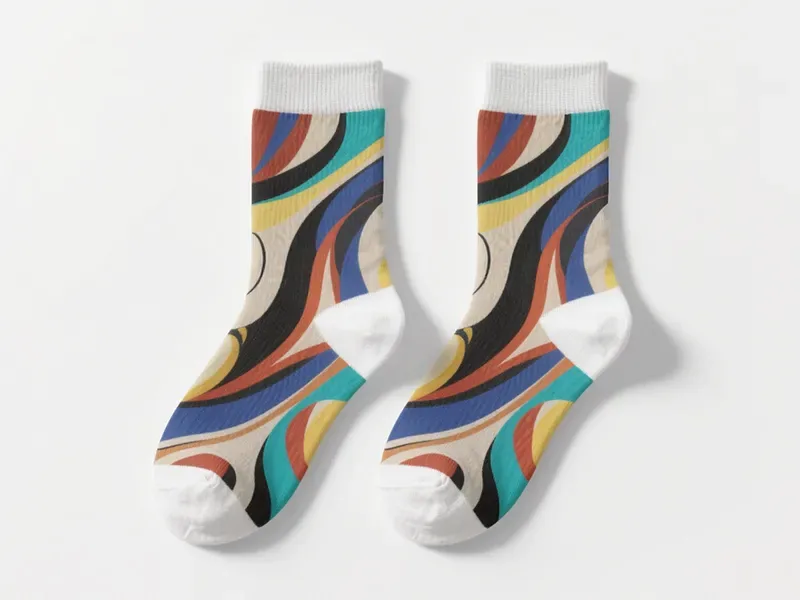
Look at fine lines, small text and edges. Photos should look clear, not soft or pixelated. Blurry detail usually traces back to low-resolution artwork, so check your file before blaming the print.
3. The design when stretched
Put the sock on a foot or a sock form. Check how logos and text look when the fabric stretches over the calf and instep. Circles turning into ovals, or text widening, may mean the artwork should be adjusted.
4. Heel, toe and cuff
These zones have a different knit structure. Check how color behaves there and whether any light or white areas show through. Ask the supplier how they handle these areas for your blank.
5. Wrap and alignment
On 360° seamless printed socks, the design should wrap without a visible join line. Check that pattern repeats meet cleanly and that the main logo sits where you expect when the sock is worn.
6. Left and right consistency
Compare both socks in the pair. Logo position, color and pattern placement should match.
7. Hand feel
Run your hand over printed and unprinted areas. The printed area should feel comfortable for its intended use. A stiff feel can point to incomplete finishing, especially on cotton blanks.
8. Wash test
Wash the sample the way your customers will. Check for color loss, bleeding into light areas, and changes in feel. If you don’t have time for repeated washing, at least do one full wash and dry cycle.
9. Size and fit
Check the size against your size plan. Try the sample on more than one foot size within the stated range if you can. For team or retail orders, confirm the size split before you approve.
10. Labels and packaging
If the order includes header cards, labels or gift boxes, review those samples too. Check spelling, barcodes and brand marks.
How to Give Feedback That Gets Fixed
Vague feedback (“colors look off”) leads to slow back-and-forth. Be specific:
- Name the element: “the red in the logo,” not “the color”
- Describe the change: “slightly darker and less orange”
- Mark photos: circle the problem area on a photo of the sample
- Prioritize: list must-fix items separately from nice-to-haves
Understanding What Causes Common Sample Issues
| Issue | Common cause | Typical fix |
|---|---|---|
| Colors duller than expected | Fiber, pretreatment or color profile | Adjust profile, pretreatment or blank |
| Soft or blurry detail | Low-resolution artwork | Supply higher-resolution or vector files |
| Light areas at heel or toe | Knit structure and loading | Adjust loading or blank construction |
| Stiff feel | Incomplete washing after fixing | Improve finishing |
| Color loss after washing | Incomplete fixing | Check heat or steam conditions |
Why the Supplier’s Process Matters
A supplier that runs its own printing and finishing can usually trace a sample problem to its cause quickly. At Colorido we build the sock printers and finishing equipment and print our own custom printed socks, so the same team can adjust artwork, color settings and finishing. See the steps on our production process page.
If you print in-house, the same checklist applies to your own first articles on sock printers like the CO80-210PRO or CO60-100PRO.
Choosing the Right Blank Before You Sample
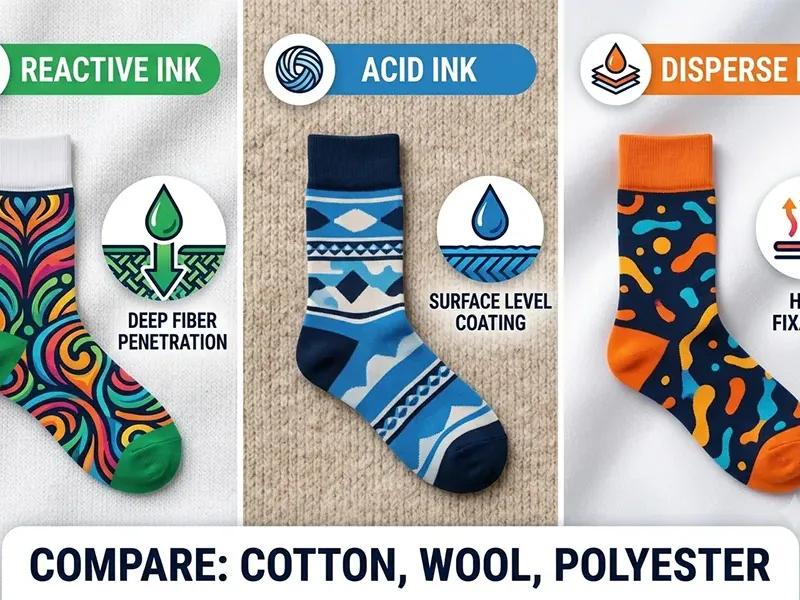
Many sample problems start with the blank. Polyester blanks (see our blank polyester socks) give vivid color with a simpler workflow. Cotton blanks (see our blank cotton socks) feel softer but need pretreatment and steaming. Decide which matters more for your customers before sampling. Our polyester vs cotton socks guide compares the two in more detail.
FAQ
How many samples should I request?
At least one pair per design and blank. For large orders or several sizes, request samples in the sizes that matter most.
Should I approve from photos?
Photos help with early checks, but a physical sample is the only way to judge stretch, feel and wash performance.
What if the sample is close but not perfect?
List specific changes and request a revised sample before approving bulk.
Do repeat orders need a new sample?
If the design, blank and supplier are unchanged, many buyers approve from the previous sample. A change to any of these deserves a new one.
Approve With Confidence
A careful sample review protects your budget, your brand and your delivery date. When you’re ready to start, explore our custom printed socks and request a sample on your chosen blank.
Leave A Comment