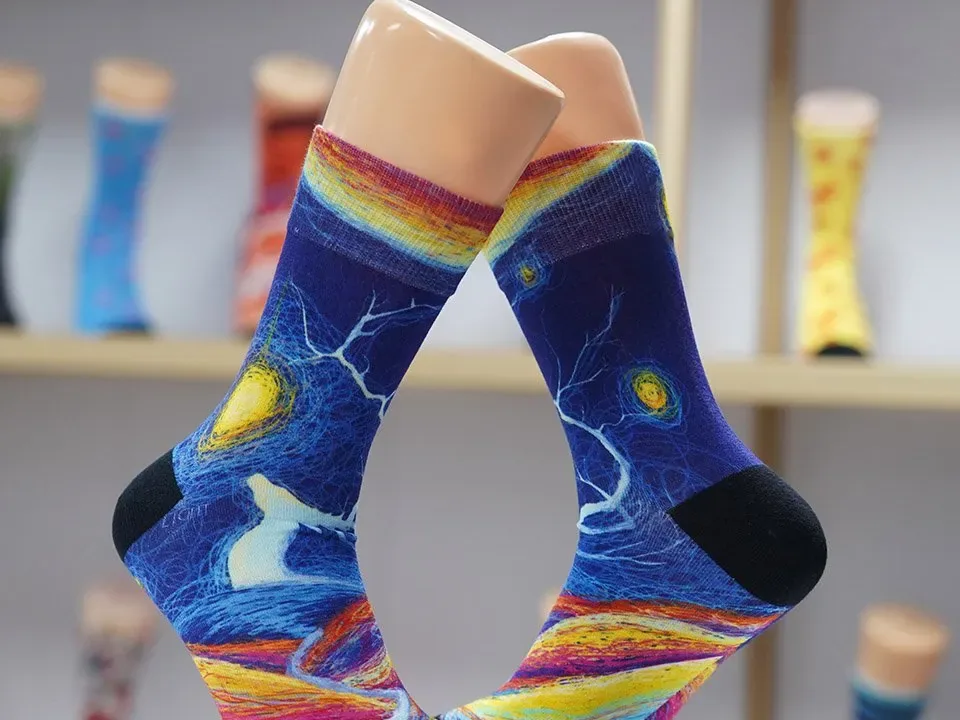
If you’ve shopped for custom socks recently, you’ve probably seen the phrase “360° seamless printing.” It sounds like marketing, but it describes a specific production method with real advantages and real limits. This guide explains what 360° seamless printed socks are, how they’re made, and what a brand, retailer, or promotional buyer should check before placing an order.
The Short Definition
A 360° seamless printed sock is a finished, knitted sock that’s printed all the way around while it’s stretched over a rotating roller. The design wraps around the leg in one continuous pass, so there’s no visible join line on the sides where the artwork stops and starts.
That’s different from the two other common ways to decorate socks:
- Knitted (jacquard) socks, where the pattern is built from colored yarns during knitting
- Heat-press sublimation, where a printed transfer is pressed onto a flattened sock, usually one side at a time
How 360° Seamless Printing Works
- A blank sock is knitted from a fiber chosen for printing.
- Pretreatment is applied if needed. Natural fibers such as cotton usually need it, while polyester printed with disperse ink usually doesn’t.
- The sock is loaded onto a roller on a rotary sock printer.
- The sock printer applies ink as the roller rotates, wrapping the design around the tube.
- The color is fixed. Polyester is heat-set in a sock oven. Cotton and nylon are typically steamed and washed.
- The sock is dried, inspected and packed.
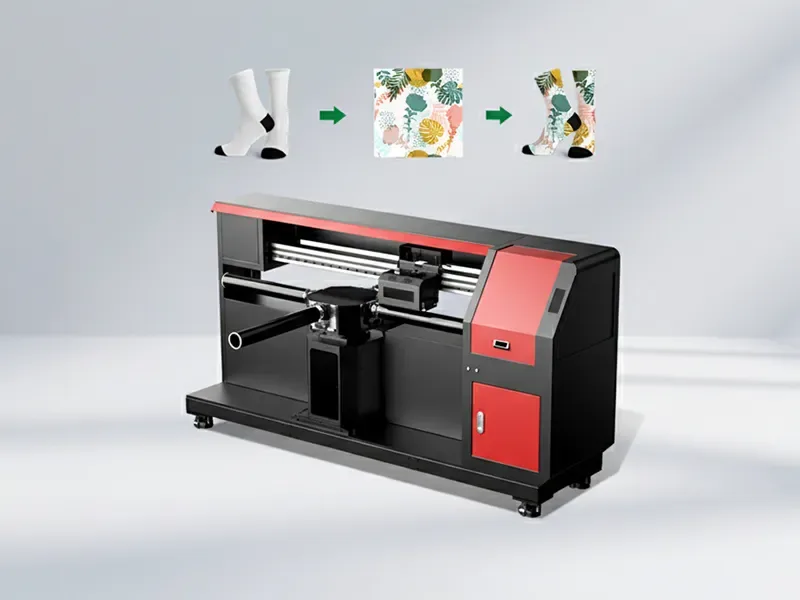
At Colorido we build the sock printers and the finishing equipment, and we use the same process to print our own custom printed socks. You can see the line on our factory tour and in our production process overview.
Why Brands Choose Seamless Printing
No side lines
Pressed socks often show faint lines or gaps at the folded edges. Rotary printing avoids them, which matters for all-over patterns, photos and gradients.
Full-color artwork
Photos, gradients and detailed illustrations print as artwork, without being limited to the number of yarn colors a knitting machine can feed.
Designs come from files
There are no screens to make and no knitting programs to rebuild for each design. Switching artwork between orders is a file change, which makes short runs and many designs practical.
More than one fiber
With the right ink and finishing, rotary printing works on polyester, cotton, nylon, wool and blends, not just polyester.
Where Knitted Socks Still Win
Seamless printing isn’t the answer to every brief. Knitted (jacquard) socks are a strong choice when:
- The design is a simple logo, stripes or a few flat colors
- You want a textured, woven look
- The same design will be reordered in very large volume
Many brands use both: knitted socks for core styles and 360° printed socks for seasonal, photo or limited designs.
What to Check Before You Order
1. Ask which fiber the blank is made of
The fiber determines the ink, the finishing steps and how bright the colors look. Polyester-rich blanks give vivid color with a simpler workflow. Cotton-rich blanks feel softer but need pretreatment and steaming.
2. Ask for a physical sample
A screen mockup can’t show how artwork stretches over a calf or a heel. Approve a real sample before bulk production.
3. Check the heel, toe and cuff
Look at how the design behaves where the knit structure changes. Ask the supplier how they handle these areas for your blank.
4. Ask how color is fixed
A supplier should be able to explain their heat-setting or steaming and washing process. Incomplete finishing is a common cause of fading.
5. Confirm who makes the socks
Ask whether the supplier prints in-house or resells. A factory that operates its own sock printers can usually answer process questions directly. Our certificates page lists the CE certificates and national patents behind our equipment.
Seamless Printing Beyond Socks
The same rotary approach decorates other tubular products, including wrist sweatbands, cooling arm sleeves, tubular headwear and, on larger-roller machines, seamless yoga wear. Brands often order matching sets from one supplier. See more on our applications page and in our comparison of sublimation pressing vs 360° digital printing.
How the Sock Printers Behind It Differ
Colorido sock printers come in several configurations. Reference output, per our official sock printer specifications:
- CO80-210PRO: four-roller sock printer, 50–120 pairs/hour
- CO60-100PRO: twin-roller sock printer, 40–65 pairs/hour
- CO70-220PRO: single-roller multifunction sock printer, 20–30 pairs/hour
- CO80-600DK: desktop sock printer, 20–30 pairs/hour
Reference output varies with print mode, artwork, material, workflow and configuration.
FAQ
Are 360° printed socks the same as sublimated socks?
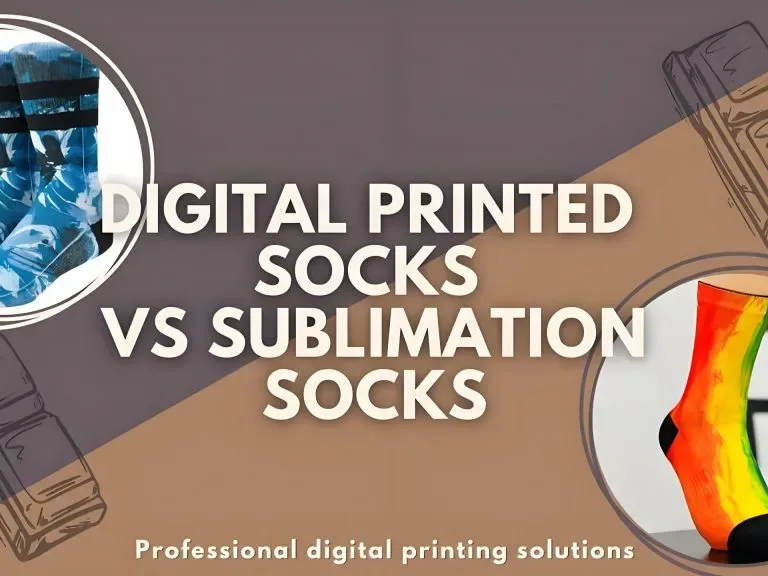
Not exactly. Sublimation usually means pressing a printed transfer onto polyester. 360° rotary printing applies ink directly to the sock as it rotates, and it can be used on several fibers with matching inks.
Do seamless printed socks fade?
Durability depends on the fiber, ink and finishing. Proper fixing and washing are essential. Ask for wash-tested samples.
Can I print a logo on 360° socks?
Yes. Logos, names and numbers print well, and so does full-coverage artwork.
Are 360° printed socks suitable for bulk orders?
Yes. Multi-roller sock printers are designed for continuous production, and designs can still change from order to order.
Next Step
If you’re comparing options for your next collection or promotion, start with our custom printed socks page and request a sample on the blank you plan to use.
Leave A Comment