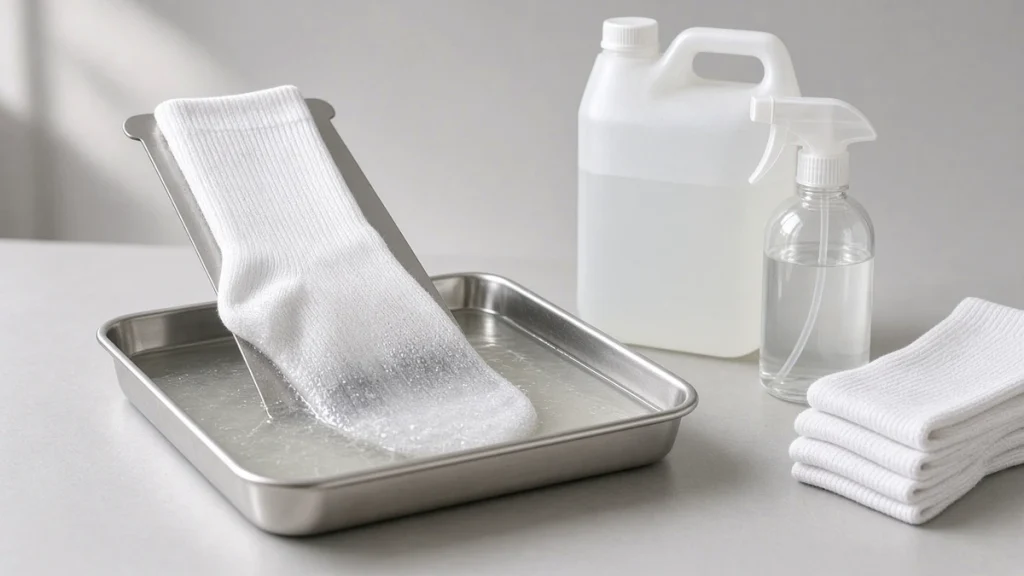
Printing cotton socks with reactive ink is not just a matter of loading a different ink. The cotton must be prepared so the dye can bond and stay sharp. This preparation is called pretreatment. It is one of the most important, and most variable, steps in the cotton route for digital printing socks.
Why pretreatment is needed
Reactive dyes bond chemically with cotton fibers under the right conditions during fixation. Pretreatment helps create those conditions and also helps control how ink spreads in the fabric. Without proper pretreatment:
- Colors can be weak.
- Edges may blur as ink spreads.
- Fixation may be incomplete, leading to bleeding in the wash.
What pretreatment involves
Specific recipes and procedures come from ink and chemical suppliers, so always follow their guidance. In general, pretreatment involves applying a solution evenly to the socks and drying them before printing. The key is consistency: every sock should receive the same treatment.
Consistency is everything
Uneven pretreatment causes uneven color: patches of stronger and weaker print within the same sock or between socks. To keep it consistent:
- Use measured solution concentrations.
- Apply evenly and allow full saturation as specified.
- Remove excess solution consistently, for example with a spin dryer such as the CO753-600.
- Dry thoroughly and evenly; a tumble dryer like the COHE-130 helps.
- Store pretreated socks in clean, dry conditions and print within the recommended time.
Drying matters
Damp socks print poorly and can cause ink spreading. Over-dried or heat-damaged socks may also print inconsistently. Follow the supplier's drying guidance and check moisture before printing.
Pretreatment and blanks
Some blanks contain softeners or finishes that interfere with pretreatment. Test new blanks before large orders. See choosing blank socks for digital printing.
After printing
Pretreated, printed cotton socks go on to steam or low-temperature fixation, then washing to remove unfixed dye and remaining chemicals, then drying. Read steaming vs oven fixation and washing and drying printed socks.
Safety
Handle chemicals according to their safety data sheets: gloves, eye protection and ventilation as required. Store chemicals properly and label containers.
Troubleshooting pretreatment issues
- Patchy color: uneven application or drying.
- Blurry edges: insufficient pretreatment or damp socks.
- Weak color overall: concentration too low or fixation issues.
- Stiff hand feel after finishing: incomplete washing.
Organizing the pretreatment area
Pretreatment involves liquids, so keep it physically separate from the printer to protect printheads from moisture and chemical splashes. A practical layout places pretreatment, extraction and drying near water and drainage, with dried socks moving to a clean staging area before printing.
Label containers clearly, keep measuring tools dedicated to pretreatment and record each batch's preparation details. Small habits like these make results repeatable from day to day and operator to operator.
Batch sizes
Pretreat in batches sized to your printing plan. Pretreating far more socks than you can print within the recommended time risks inconsistent results. Pretreating too few creates frequent interruptions. Many businesses pretreat a day's planned cotton production in the morning.
Testing changes
When you change chemical supplier, concentration or drying method, test before switching production. Print a standard test design on socks pretreated the old and new way, finish them identically and compare color, sharpness and wash results. Only change one variable at a time so you know what made the difference.
Signs pretreatment needs adjusting
Watch finished cotton socks for these clues:
- Colors look weak or dull even with correct fixation: pretreatment may be too light or uneven.
- Edges look fuzzy or ink spreads: coverage may be insufficient.
- Patchy color across a sock: uneven application or extraction.
- Stiff feel after finishing: residue may not be washed out fully.
Change one variable at a time and test before production. Our printed cotton socks page shows the expected result, and see pretreatment and finishing equipment for supporting machines.
Safety and storage
Follow the safety data sheet for every chemical: wear the recommended gloves and eye protection, keep containers closed and labeled, and store them away from heat and food. Dispose of waste liquids according to local rules.
Training operators
Pretreatment is easy to get slightly wrong, so train every operator on the same method and show examples of good and poor results side by side.
Keep sample photos at each workstation so everyone works to the same standard, and refresh them whenever the process changes.
Frequently asked questions
Does polyester need pretreatment?
Generally not for disperse ink printing.
Can pretreated socks be stored?
For a limited time under proper conditions; follow supplier guidance.
Is pretreatment the biggest variable in cotton printing?
It is one of the biggest. Consistent pretreatment makes the rest of the process predictable.
Conclusion
Pretreatment prepares cotton socks for reactive ink, enabling bright, sharp and durable prints. Consistency in application, extraction and drying is the key. Explore the cotton finishing equipment in our pretreatment and finishing range, see printed cotton socks, or contact us for process guidance.
Leave A Comment